Longer Out Than In
The breathing thing, except the version that was actually tested — including the part where the people it beat were meditating, not doing nothing.
The moment
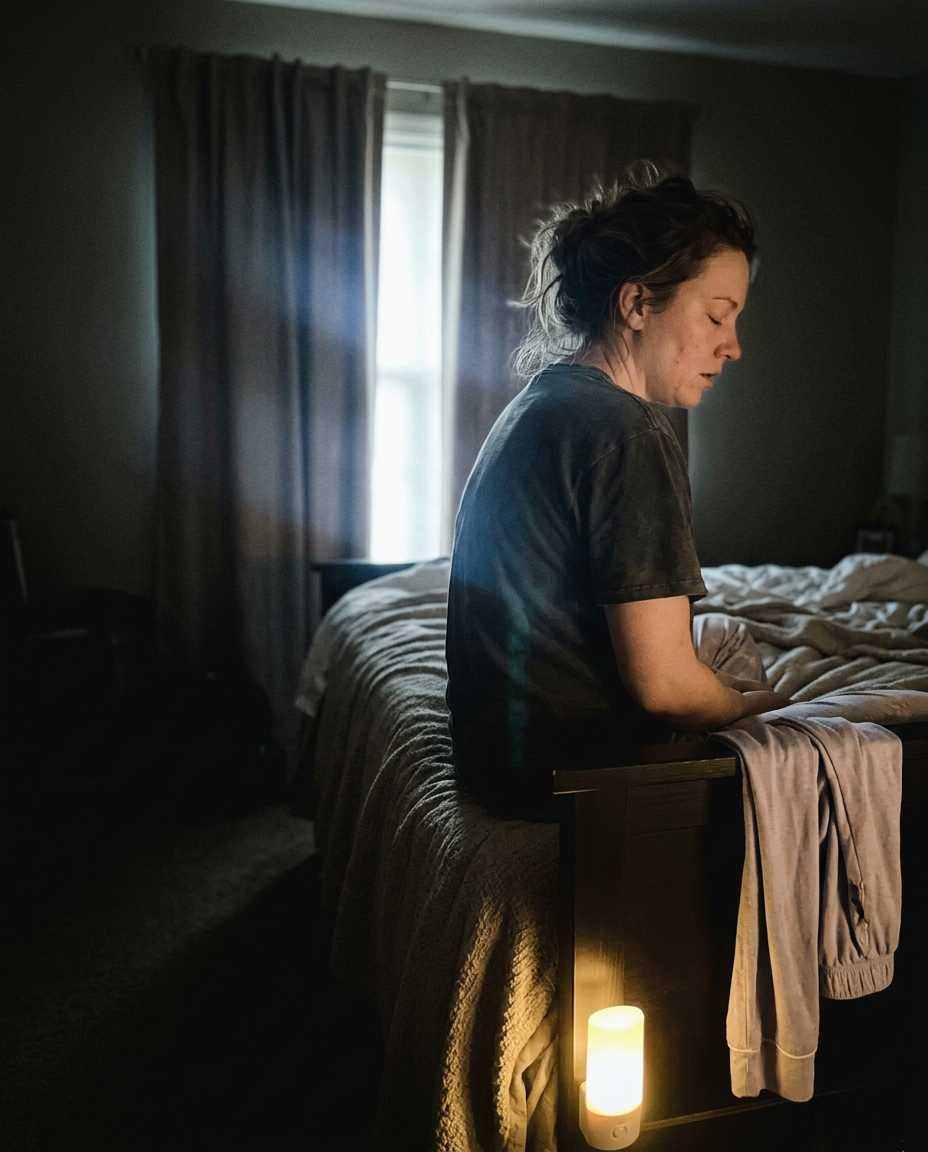
It is eleven forty at night, you are already lying down, and your heart is going like you ran for a bus you did not run for. You told yourself to just breathe, you pulled three big ones in through your nose, and nothing moved. Now you are a person in the dark with more air in her and the same heart rate.
Nobody tells you the boring part: the big inhale is the half of the instruction that does not do the work.
Do this
- Breathe in through your nose. Normal size. Not the heroic one.
- On top of that breath, sip a second, shorter inhale through your nose. Your lungs are nearly full, so this one only tops them off. It feels slightly ridiculous. That is correct.
- Let it go out through your mouth, slowly, until there is genuinely nothing left. Longer than feels natural.
- Repeat at a pace you are not fighting. Five minutes. If you go lightheaded, you are pushing it — stop and breathe normally until it passes.
Two in, one long out. The exhale is the whole thing; the second inhale is only there to make the exhale long. All-nose was allowed in the study too, so that part is a preference, not a rule.
Why it's not magic
Breathe out slowly and your heart slows a little on that breath. That is plumbing, not belief. Spend more of your minute breathing out than in, and more of your minute goes to the slowing-down half.
Then it comes back on the next inhale. Over the month, resting heart rate in the study did not move, and neither did heart rate variability. This is something that happens inside a breath. It is not a setting you turn down.
The double inhale is not an invention either. It is the shape of a sigh, and of a kid's breathing after they have finished crying. You are doing on purpose what your body already does on the way down.
What I am not telling you is that this heals your nervous system or lowers your cortisol. Nobody measured your cortisol. What got measured was how fast people breathed and what they ticked on a questionnaire.
They did measure sleep — hours, efficiency, a nightly score off a wrist strap. None of it moved. Not in the sighing group, not in any of the four. I am still handing you this at eleven forty at night, so you should have that: the study has nothing to say about whether the night that follows goes better. It is for the ten minutes you are in. That is the whole claim.
The size of it
The paper is Yilmaz Balban et al., 2023, in Cell Reports Medicine. A hundred and eight signed up, a hundred finished, five minutes a day for twenty-eight days at home. The cyclic sighing group came out ahead of mindfulness meditation on mood and on breathing rate.
Three things the headline leaves out.
That 108 was never 108
That is everyone, split across four groups. The cyclic sighing arm — the one that produced the result you have read a thousand times — was twenty-seven people. Twenty-seven. That is a hint, not a law, and every article leading with 108 is borrowing size it did not earn.
It beat meditating, not doing nothing
There was no do-nothing group. The people it beat were doing a five-minute mindfulness practice, which also worked — anxiety went down and mood went up in all four groups. It won by a margin, against something already decent. "Breathing beats meditation" is true and much smaller than it sounds.
They tested a habit, not a rescue
Five minutes a day for a month. Not ninety seconds in a parked car with your hands shaking.
I do it in a parked car with my hands shaking. But that is me telling you about my week, not showing you evidence. It worked for me. I'm one person, and one is not a study.
Not for
If your heart races most days, or you are short of breath sitting still, that is a conversation with someone who can examine you — not a blog post, and not me. If you are on something that works, keep taking it. Nothing here replaces it.
If tonight is worse than a bad night: in the US, call or text 988. It is free and it is not an overreaction.
One piece of a bigger thing
This is one of the five gestures in the bad-night sequence, and the cheapest one. So do not schedule it. Wait until the next time you catch yourself taking the big useless breath, put the small second one on top of it, and let the way out run long. Once. That is the assignment.
More from Wilder Brain
Task Aversiveness, In Bar Language
The real predictor of procrastination has a clinical name and nothing to do with being lazy. Here is the number behind the word, and the one thing that actually moves it.
Cortisol, In Bar Language
Everyone online is selling a way to lower it. Here's what it actually is, why yours is supposed to spike at dawn, and the short list of things that really move it.
Nobody Claps For This Part
Eight weeks in, doing everything right, and nothing feels like anything. What two large trials actually measured about acting first and wanting it later.